Speakers
Governance, Policy, and People: Enabling conditions for fisheries management in an ecosystem context
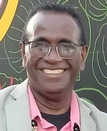
Transform Aqorau Solomon Islands National University, Solomon Islands
Session 1 Keynote Speaker
Professor Transform Aqorau is Vice-Chancellor of Solomon Islands National University and an international fisheries lawyer and policy specialist with extensive experience in Pacific fisheries governance, ocean policy and institutional development. He previously served as the inaugural Chief Executive Officer of the Parties to the Nauru Agreement Office, where he led the development and implementation of the Vessel Day Scheme and other major reforms in regional tuna management. He has also held senior roles with the Pacific Islands Forum Fisheries Agency, the Pacific Islands Forum Secretariat and the Solomon Islands Government. Professor Aqorau is a Founding Fellow of the Pacific Academy of Sciences, a Visiting Fellow at the Australian National Centre for Ocean Resources and Security at the University of Wollongong, and an Adjunct Professor at the University of Queensland. His work focuses on fisheries governance, sustainable development, institutional reform and strengthening Pacific leadership over ocean resources.

Marta Ballesteros Spanish Institute of Oceanography (IEO-CSIC), Spain
Session 1 Keynote Speaker
Dr. Marta Ballesteros is a political scientist at the Spanish Institute of Oceanography in Vigo, Spain. Her research focuses on marine governance, ecosystem-based fisheries management, and the science-policy interface, combining interdisciplinary and transdisciplinary approaches to strengthen the credibility, legitimacy, and relevance of scientific knowledge and advice. Recognizing that decision-making is shaped not only by scientific evidence but also by political considerations and societal values, she investigates how knowledge is translated into policy and practice, and how integrating the human dimension and addressing the democratic implications of change can support transformative responses to complex marine social-ecological challenges. She co-chairs the Working Group on Stakeholder Engagement (WGENGAGE) of the International Council for the Exploration of the Sea (ICES) and the Expert Working Group on the Social Dimension of Fisheries under the European Commission's Scientific, Technical and Economic Committee for Fisheries (STECF).
Global change and fisheries – incorporating uncertainty into scientific advice and management

Kathy Mills Gulf of Maine Research Institute, Portland, Maine, USA
Session 2 Keynote Speaker
Dr. Kathy Mills is a Senior Research Scientist at the Gulf of Maine Research Institute in Portland, Maine. She earned her Ph.D. in Natural Resources at Cornell University. Her research focuses on understanding and responding to the impacts of climate change on marine ecosystems and fisheries through integrated modeling and systems-based approaches that bridge oceanography, ecology, fisheries science, and social sciences. She investigates (1) how oceanographic and ecosystem conditions are changing; (2) how these changes affect marine species, fisheries, and coastal communities; and (3) how fishery participants, fishing communities, and management institutions can respond effectively to climate and ecosystem change. She works closely with scientific collaborators, resource managers, and industry stakeholders to co-produce science that advances understanding of fisheries as coupled social-ecological systems and supports climate adaptation and resilience. She currently serves in leadership roles within several regional and international initiatives focused on climate-informed fisheries management and ecosystem assessment, including as co-director of the UN Ocean Decade Programme Fisheries Strategies for Changing Oceans and Resilient Ecosystems by 2030 (FishSCORE2030), co-chair of the ICES-PICES Strategic Initiative on Climate Change Impacts on Marine Ecosystems, and member of the New England Fishery Management Council’s Climate and Ecosystem Steering Committee. Through her research and scientific leadership, Dr. Mills advances actionable science that helps marine fisheries, resource managers, and coastal communities anticipate, adapt to, and build resilience in a rapidly changing ocean.
Practical implementation of fisheries management in the ecosystem context: Scalable approaches and overcoming operational challenges
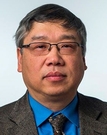
Yong Chen School of Marine and Atmospheric Sciences, State University of New York at Stony Brook (SUNY - Stony Brook), USA
Session 3 Keynote Speaker
Dr. Yong Chen is Professor of Marine Science at Stony Brook University’s School of Marine and Atmospheric Sciences. His research integrates quantitative fisheries ecology, population dynamics, stock assessment, ecosystem modeling, and management strategy evaluation to support sustainable fisheries under environmental change. His work spans fisheries monitoring and survey design, fish and invertebrate population dynamics, habitat suitability and spatial distributions, and the effects of fishing, climate change, and species interactions on fisheries productivity and ecosystem structure. He develops methods for assessing fisheries across a wide range of data availability, quantifying uncertainty and risk, and evaluating biological reference points, harvest control rules, and spatial management measures. Central to this research is linking population and ecosystem processes to practical assessment and management decisions. Working across North America and Asia, he collaborates with scientists, managers, and fishing communities to develop approaches that balance fisheries production, ecosystem resilience, biodiversity conservation, and livelihoods. Dr. Chen serves on the Mid-Atlantic Fishery Management Council’s Scientific and Statistical Committee (SSC) and served as Editor-in-Chief of the Canadian Journal of Fisheries and Aquatic Sciences from 2011 to 2024. His work emphasizes making ecosystem-based fisheries assessment and management operational through approaches suited to different ecological conditions, data availability, and institutional capacity.
Emerging approaches to fisheries management in an ecosystem context
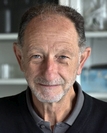
Omar Defeo University of the Republic (UNDECIMAR), Faculty of Sciences, Uruguay
Session 4 Keynote Speaker
Dr. Omar Defeo is a Full Professor at the Faculty of Sciences, University of the Republic, Uruguay. For more than four decades, his research has focused on fisheries and coastal social-ecological systems, with particular emphasis on small-scale fisheries, the conservation and sustainable use of coastal resources, and the implementation of the ecosystem approach to fisheries.
His work integrates ecological, social, and governance dimensions to understand how fisheries and coastal ecosystems respond to human pressures and climate change. A central theme has been the development of participatory and co-management approaches that involve fishers and other stakeholders in decision-making, incorporate traditional ecological knowledge, and strengthen adaptive governance.
He has also conducted long-term research on coastal ecosystems, examining ecological patterns and processes from local to global scales and their implications for conservation and management.
Dr. Defeo has published more than 240 scientific papers and is co-author of The Ecology of Sandy Shores. He has supervised more than 100 students from Latin America and Europe, including 60 master’s and Ph.D. graduates. He is a member of the National Academy of Sciences of Uruguay and the Academy of Sciences of Latin America.
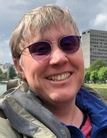
Beth Fulton CSIRO, Australia
Session 4 Keynote Speaker
Dr. Beth Fulton is a Chief Research Scientist with CSIRO where she leads work on aspects of integrated oceans stewardship, marine climate adaptation and the blue economy. In shaping the strategic direction for CSIRO’s research in these areas, she is building off nearly 30 years of work developing various system modelling tools for looking at marine ecosystems, sustainability and climate adaptation. Beth is also an Adjunct Professor and co-Deputy Director at the Centre of Marine Socioecology, a centre focuses on working collaboratively to find transdisciplinary, equitable and sustainable solutions to the problems facing coasts and oceans.